INFO
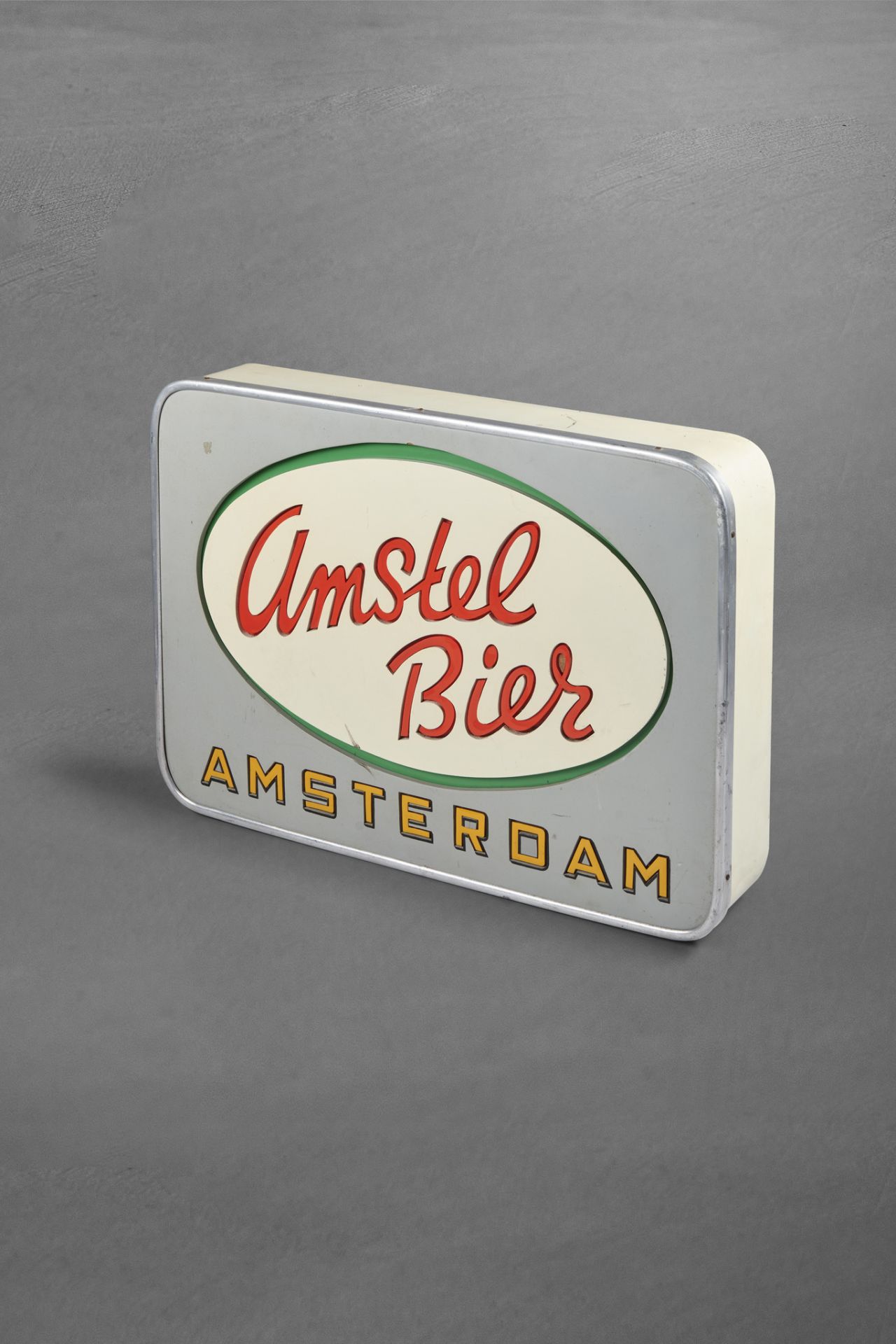
Grey light box ‘Amstel Bier Amsterdam’
c. 1930-1950
metal, plastic
46.7 x 11.7 x 67 cm
Who'll turn the light off?
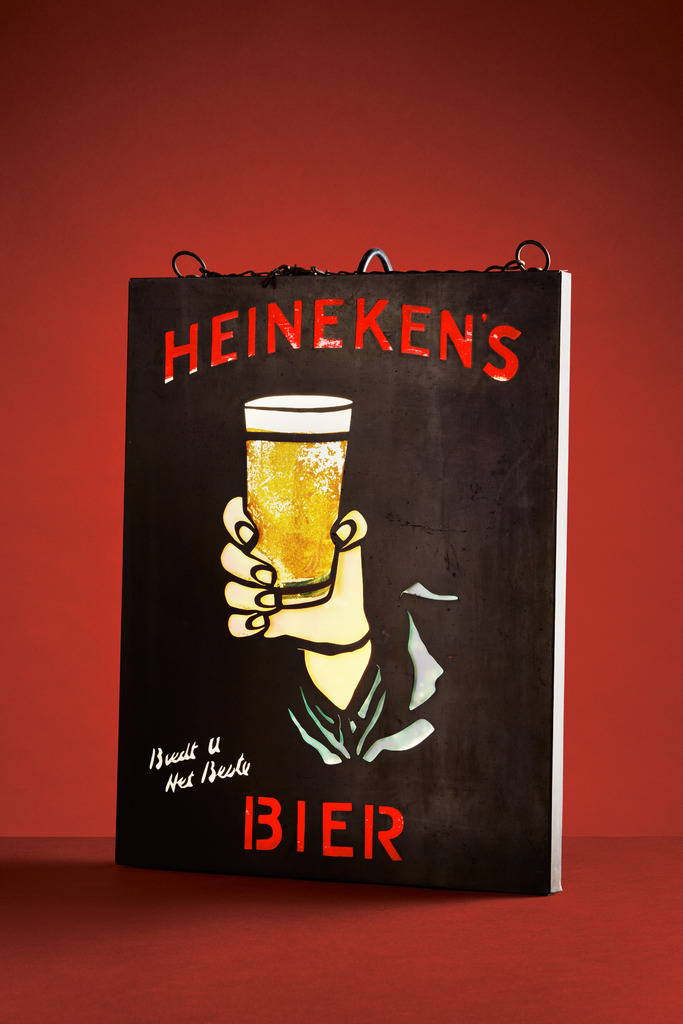
This illuminated Amstel advertisement is one of the earliest of its kind. Little more than a glorified lamp, it's a metal box with a semi-transparent plastic sheet and a fluorescent tube inside. This light box dates from around World War II, as does a similar one from rival brewery Heineken.
Heineken was by nature far less lavish with its advertising than Amstel. Where the war had brought the Dutch brewers closer together in solidarity against the German enemy, a spirited battle for consumers ensued during the postwar period of reconstruction. And advertising was the brewers' main weapon.
Race
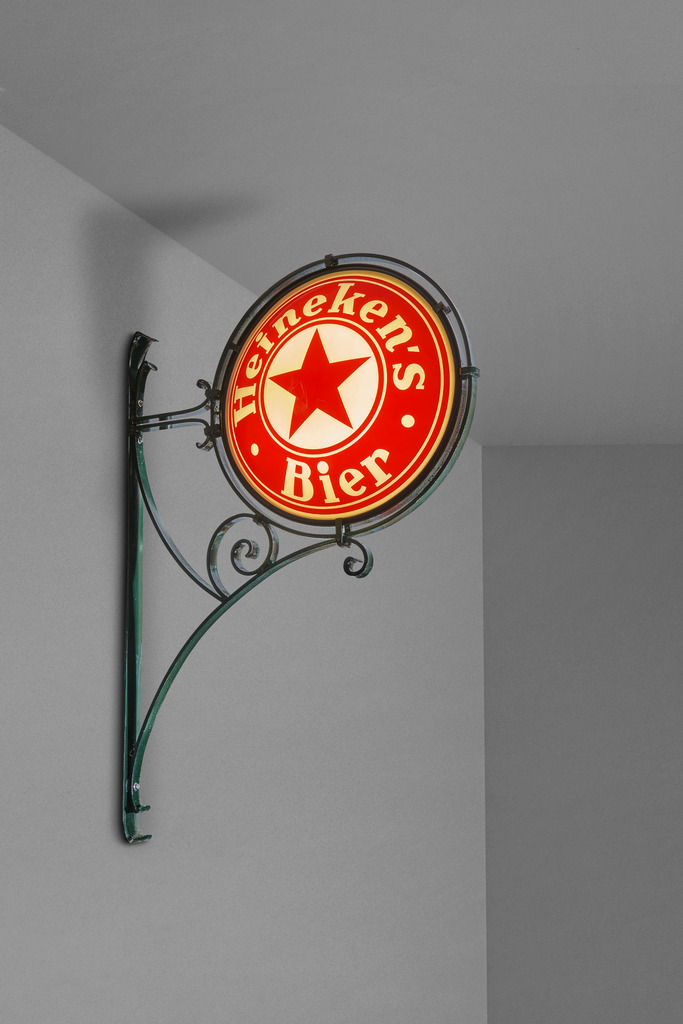
And so a veritable race in illuminated advertising started between the two brewers. Every pub and restaurant had its own colour, depending on the beer it served. In the window and outside on the façade, owners tried to attract customers with light boxes in appealing colours. Neon lights, produced by Philips in Amsterdam's Tolstraat, were frequently used for advertising (letters). The whole of the Netherlands fell under the spell of the illuminations, but it wasn't long before the first protests against this 'pollution of the scenery' began to be heard.
Neon by Janse
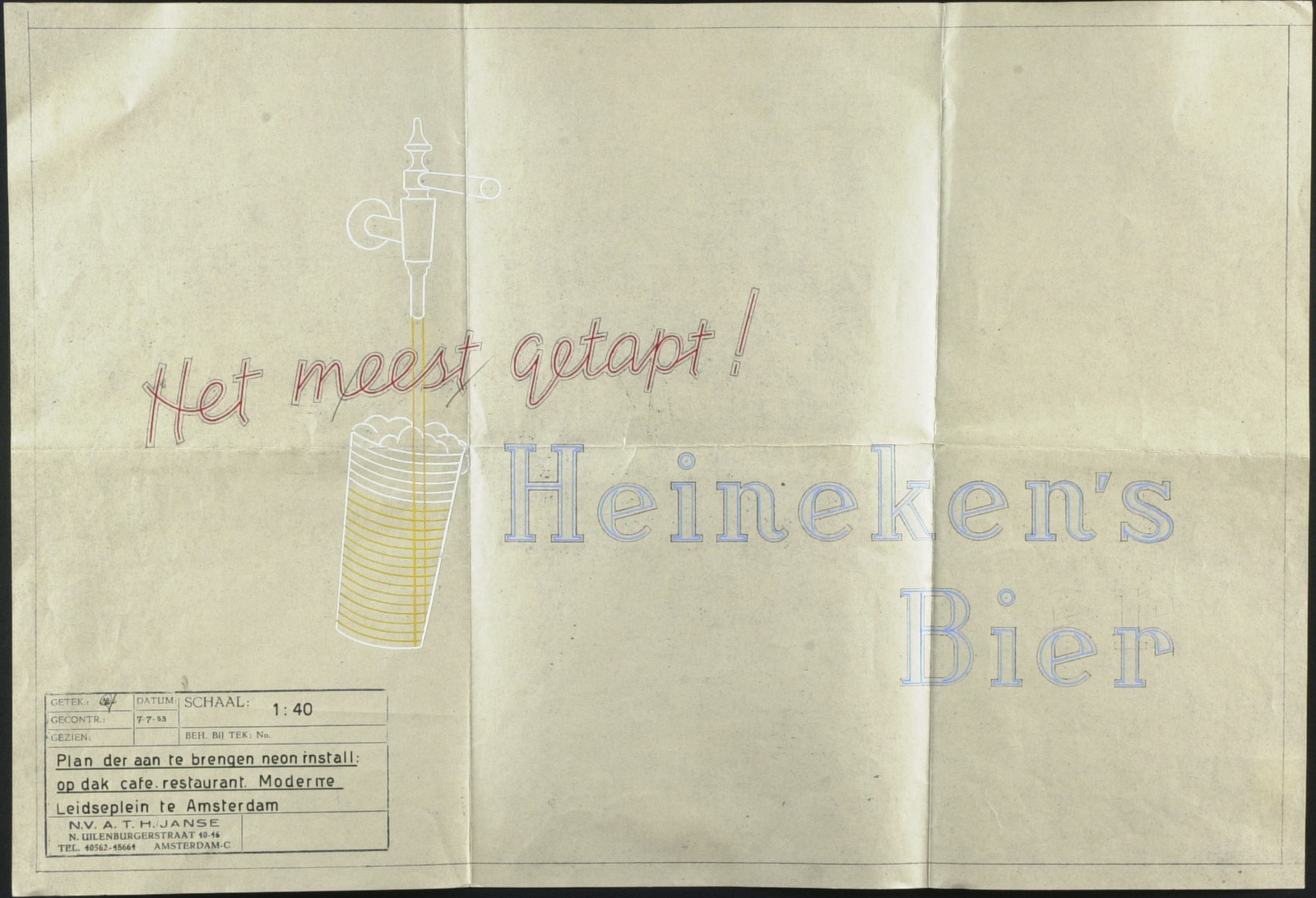
Dutch businesses took little notice of the objections. In 1953, the Heineken group commissioned a neon advertisement for the roof of café-restaurant Moderne on Leidseplein, which included the small Heineken Hoek café. The advertisement was made by the Amsterdam firm Janse, which had previously created the large neon installation on the Kurhaus in Scheveningen. At night, the enormous moving neon display showed beer pouring into a glass from a tap. 'Heineken, the most tapped beer,' the slogan declared.
Icons
In 1970, café-restaurant Moderne was renamed Heineken Hoek after the old Heineken Hoek café was converted into a football pub by the British brewery Whitbread. A decade later, Heineken replaced Janse' neon installation with two clinking beer glasses ('Amsterdammertjes' in the vernacular) and the slogan 'Delicious, clear Heineken.’ They remained an iconic feature of Leidseplein for decades. Meanwhile, the rules around illuminated advertising gradually tightened. 'Illuminated advertising with changing or flashing lights and mechanically moving advertising' was banned altogether in 2006. Heineken removed the beer glasses, which were neither moving nor illuminated by then, and installed a new, static illuminated advertisement of two double-walled glasses of Heineken Extra Cold.
The 0°C glasses disappeared altogether in 2022, when the entire building was demolished. Heineken Hoek will return with a flashy new look, which may take a bit of getting used to. The beer glasses – so familiar to so many – will unfortunately not be coming back...