INFO
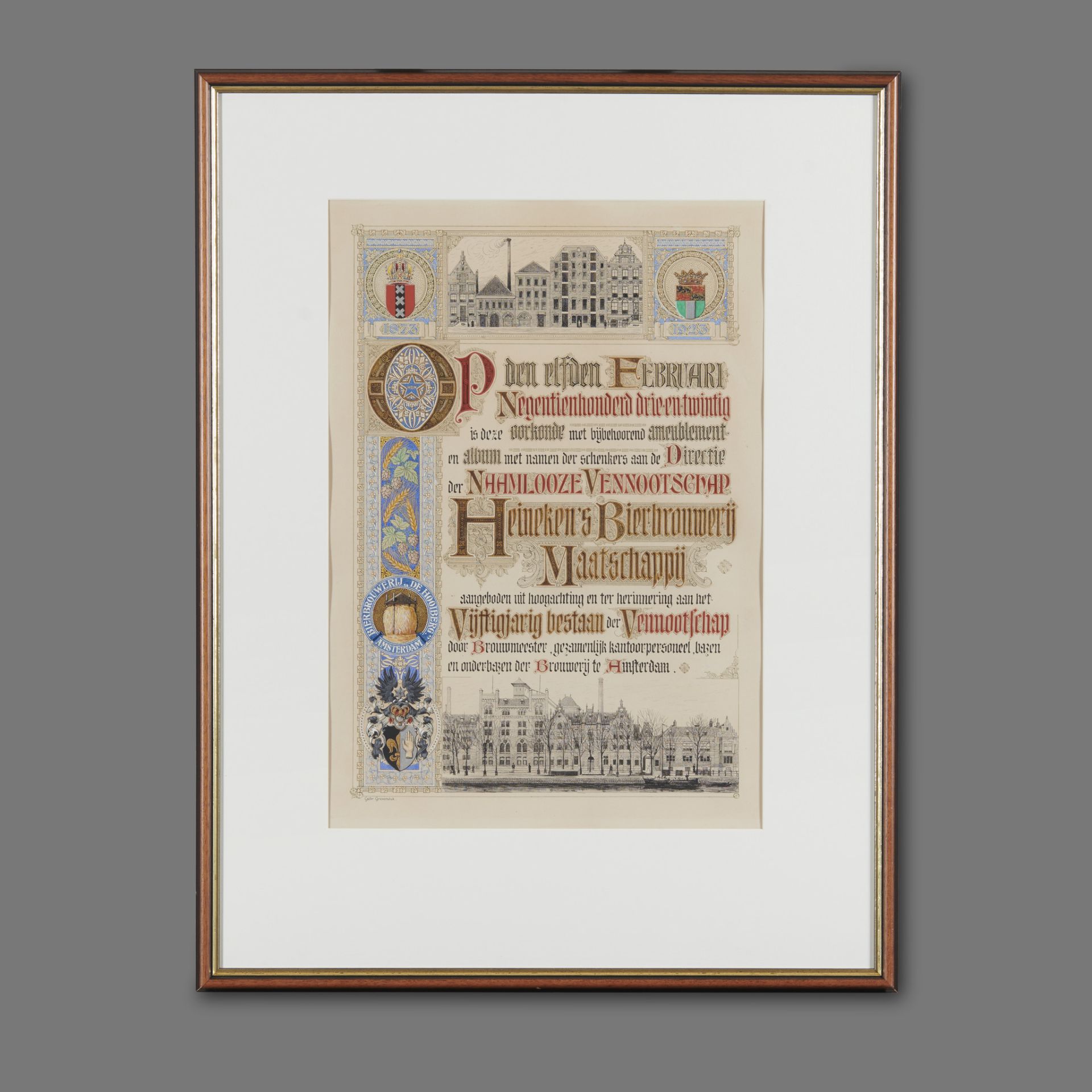
Certificate presented by the staff to Heineken’s Brewery Company N.V. on the occasion of its 50th anniversary.
Gebroeders Grevenstuk
11 February 1923
Ink and paint on paper
h. 60 × w. 40 cm (incl. frame)
Heineken turns fifty!
‘On the eleventh of February/ Nineteen hundred and twenty-three/ this certificate, together with accompanying decorative ensemble/ and an album with the names of the donors, was presented to the Board/ of the Limited Company/ Heineken’s Brewery/ by the brewmaster, the office staff, and the foremen/ and sub-foremen of the Amsterdam brewery/ in deep respect and in commemoration/ of the company’s fiftieth anniversary.’
With its ornate Gothic script, this certificate looks as though it might have come straight from a medieval monastery — especially when you notice the decorative borders. These show the earliest Heineken brewery, De Hooiberg, behind the Dam in Amsterdam, as well as its successor on Stadhouderskade. In the upper corners we see not only the Amsterdam city coat of arms but also that of Rotterdam, where the company Heineken’s Brewery (HBM) was founded in 1873. In the lower left, even a family crest is displayed, hinting at a noble lineage reaching back to the age of knights. However, appearances can be deceiving.
Royal standard
The calligraphers were no cloistered monks but the Amsterdam Grevenstuk brothers, who also produced work for the Dutch Royal House . Nor is the style truly medieval: around 1900, Gothic script was a fashionable ‘retro’ choice, lending an air of dignity and history. This seems appropriate here, as the occasion was ‘merely’ a fiftieth anniversary. It was 1923, half a century after Gerard Adriaan Heineken and the Rotterdam d’Oranjeboom brewery joined forces to produce Bavarian beer under the name HBM. As for the coat of arms: in the Netherlands you no longer needed noble status to bear one. Gerard’s great-grandfather, the learned minister Diderik Heinecken, had registered the family arms when he emigrated from Bremen to Elburg around 1750. At the time of the jubilee, Gerard’s son Henry Pierre was its official bearer.
Loyalty
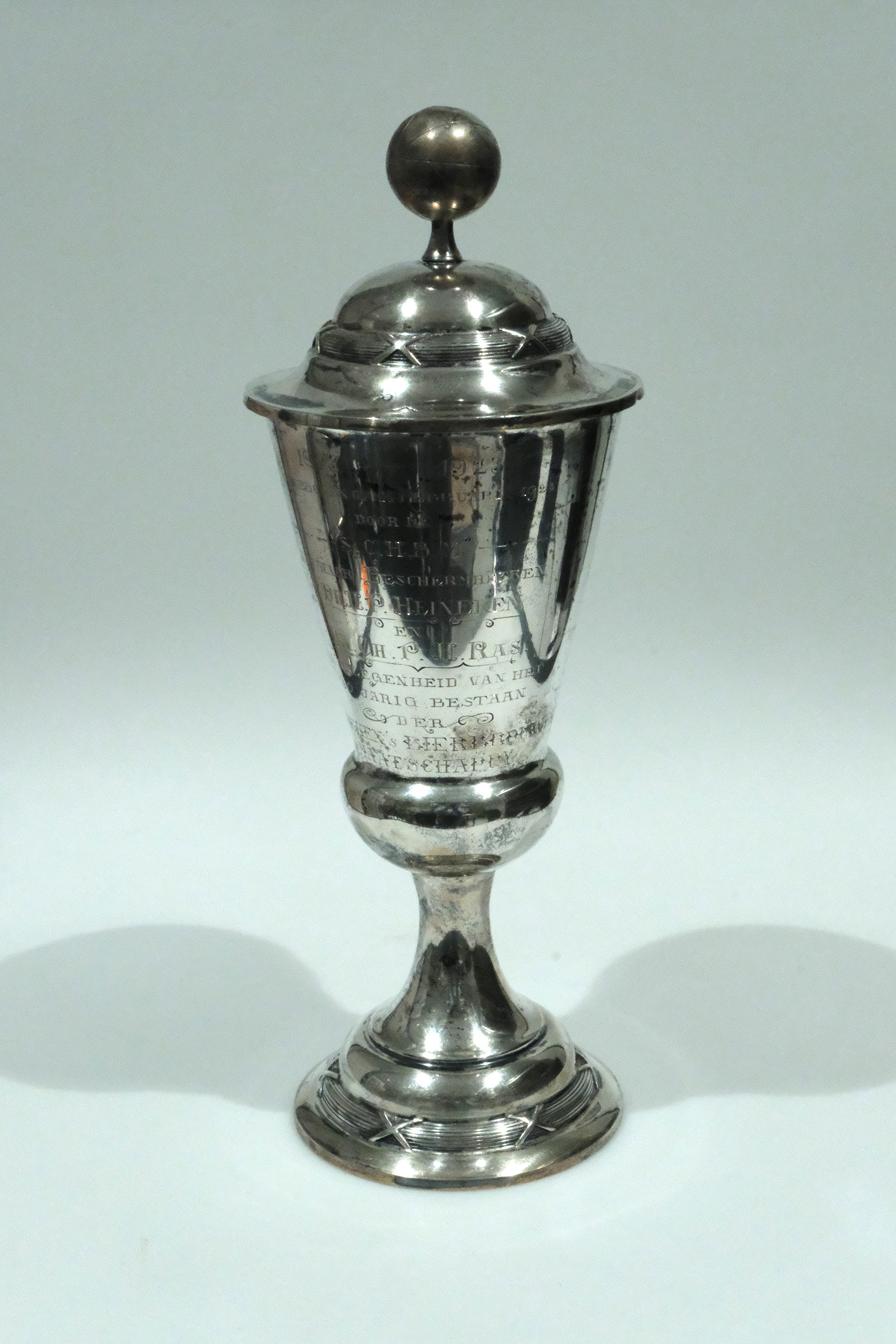
In the Roaring Twenties it was perfectly normal for staff to demonstrate their loyalty to the company with expensive, formal gifts . It was a different era, with hierarchical relationships that are hard to imagine today. The idea was that you should be grateful for such a good employer — even though proper employment conditions were still rare. In this respect, however, Heineken was ahead of its time. To mark the 1923 jubilee, the director Henry Pierre Heineken set up a non-contributory pension fund for all employees in Amsterdam and Rotterdam. At his own expense, he also created a Support Fund for workers facing financial difficulties.
Gifts all round
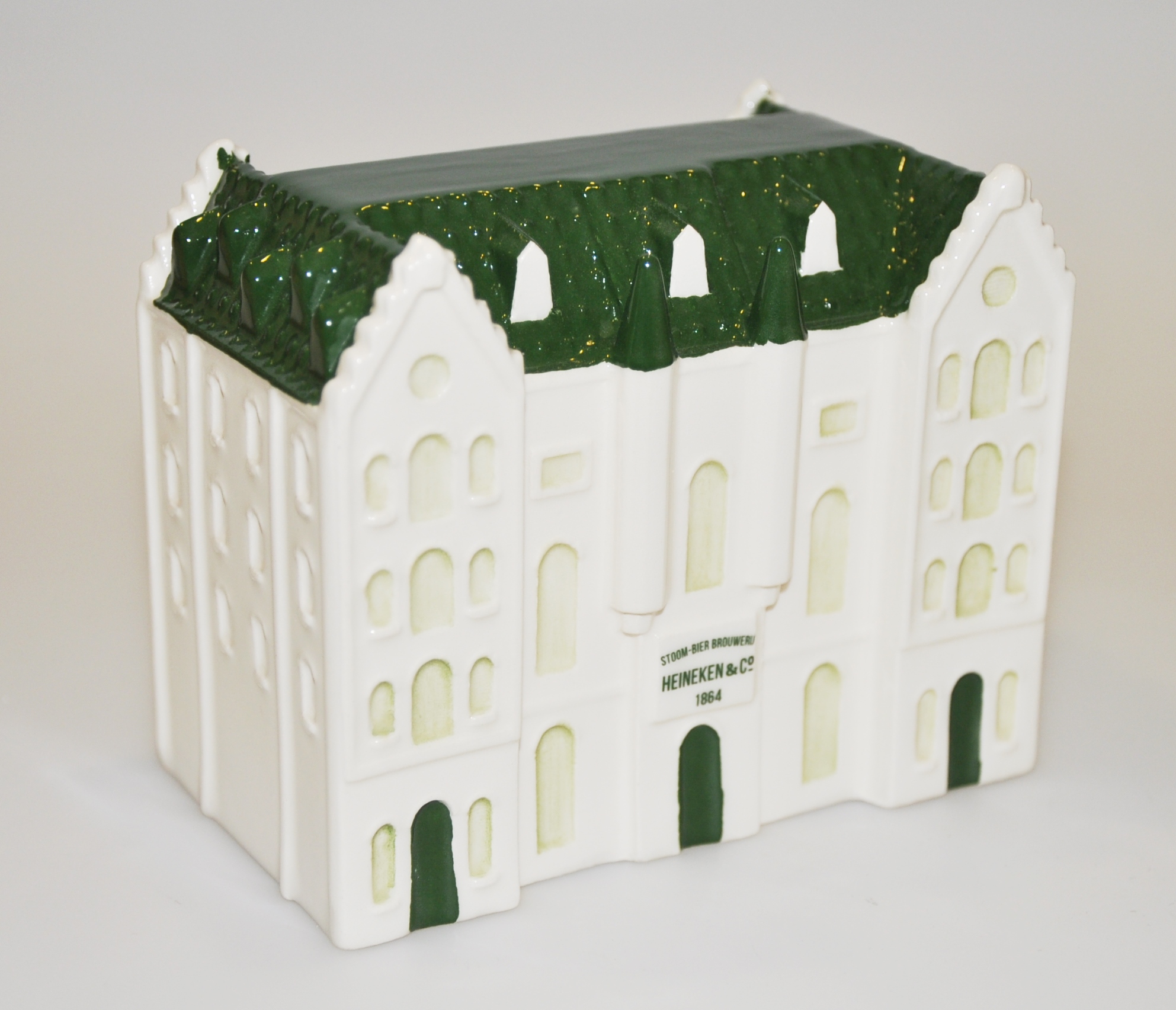
How different things are today: employees are legally protected against almost any setback and, at company jubilees, they now expect to receive a gift themselves. The same is true at Heineken, where anniversaries are marked by generous presents for all staff. On the brand’s centenary in 1973, employees of the Dutch breweries received a retro-style export crate filled with wine and spirits. At the company’s 150th anniversary in 2014, Heineken surprised staff worldwide with a hand-painted miniature brewery and the newly published standard work on its history: Heineken: 150 Years of Brewery, Brand and Family. Times change, but at Heineken the heart remains in the right place.