

INFO
C.V. Monocon
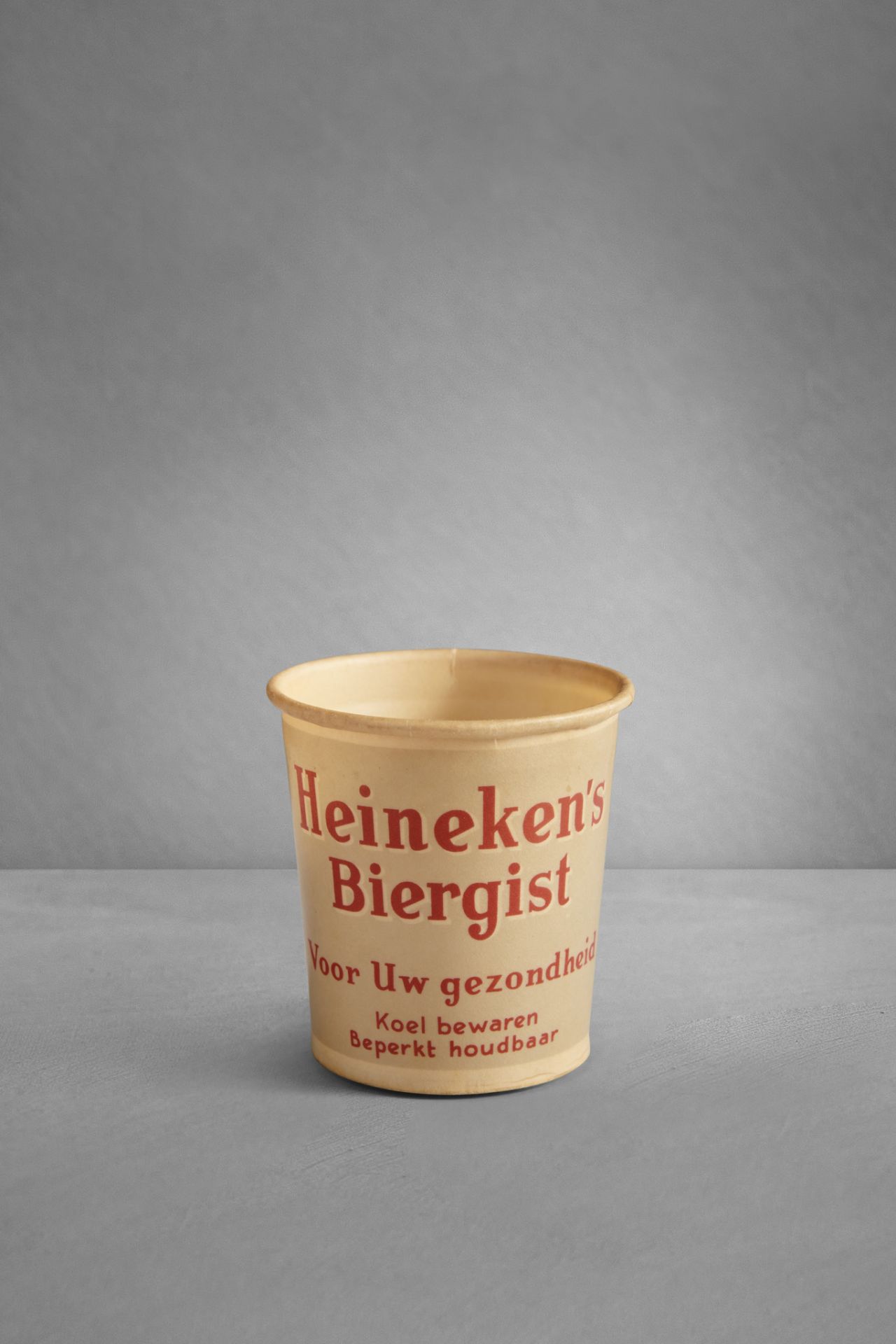
Carton of Heineken's brewer's yeast
1950-1959
Cardboard, impregnated paper
8 x 7.5 cm
Good for the skin
The ancestor of brewer's yeast (Saccharomyces cerevisiae) is wine yeast: a genetic mix of single-celled micro-organisms that ferment grapes into wine in Europe and rice into rice wine in Asia. Brewer's yeast is used to ferment carbohydrates, releasing carbon dioxide gas. In breadmaking, this makes the dough rise. In beermaking, yeast converts sugars from wort into alcohol and effervescent bubbles.
Yeasts are fungi, larger than bacteria and also possessing a cell nucleus. The cells can divide, but also reproduce themselves and are everywhere: on plants, in soil and in the air. For many centuries, beer was brewed with wild yeasts taken from nature. But this was eventually standardised, yielding many advantages, both technical and in terms of taste and food safety.
Irritation
At Heineken, standardisation mainly came about due to the frustration caused by brewing mixtures that failed. Heineken's first master brewer, Feltmann, put Dr Hartog Elion to work to find a solution. In 1886, in the laboratory of Heineken's second branch in Rotterdam's Crooswijk district, the chemist managed to cultivate a 'pure' yeast strain, free of diseases and contaminants that could ruin the brewing process.
Combating acne
Because Heineken produced this so-called A-yeast in large quantities for its own use, there was plenty over to share with bakers and others. This cup is the official packaging for brewer's yeast, which was sold as a miracle skin cure, particularly good for treating (juvenile) acne. In the Rotterdam Heineken Brewery's cashbook, sales of brewer's yeast are listed under revenue, alongside blocks of ice, malt germs and animal feed, such as spent grains (for cattle, pigs and poultry) and feed beer (for pigs). In those days, a sustainable circular economy was completely natural.
Chestnut flour and swedes
Recent research has revealed that during World War II, Heineken Amsterdam distributed free yeast to residents of the Pijp, at the time the poor residential area behind the brewery. Not for the fight against juvenile acne, but for baking bread at home – and even as a sandwich topping.
A kind gesture, when you consider that Heineken had even tried to make beer from chestnut flour and swedes because of the shortage of raw materials.