Shouting out
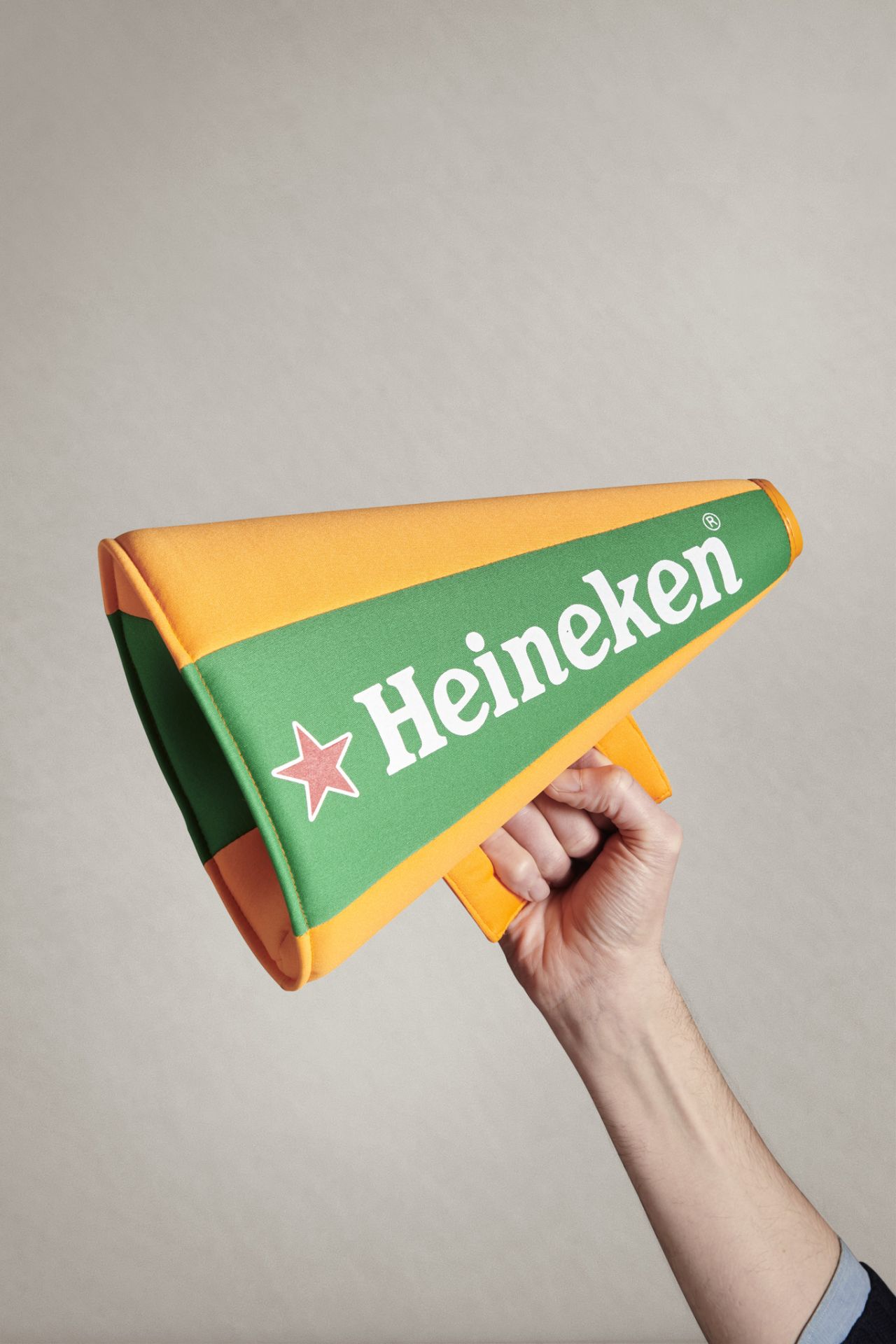
At European and World Championships, Dutch football fans have long provided a cheerful splash of orange in the stands. Though not just that: to add force to their cheers – or their boos – they bring along as many noisemakers as possible. And beer, lots of beer. Fans at home in front of the television follow the same traditions, which Heineken® has long tapped into with playful giveaways and prizes linked to the purchase of a crate of beer.
This speaker-hat was one of the prizes for the 2004 European Championship in Portugal. To take part in the competition, entrants had to tell Heineken how they planned to follow the tournament. The most original answers won quirky prizes such as this hat-and-speaker combo. With it, lucky fans could cheer on the Dutch national team – whether at home in front of the TV or together in the pub – when they played their first match on 15 June.
Orange fever
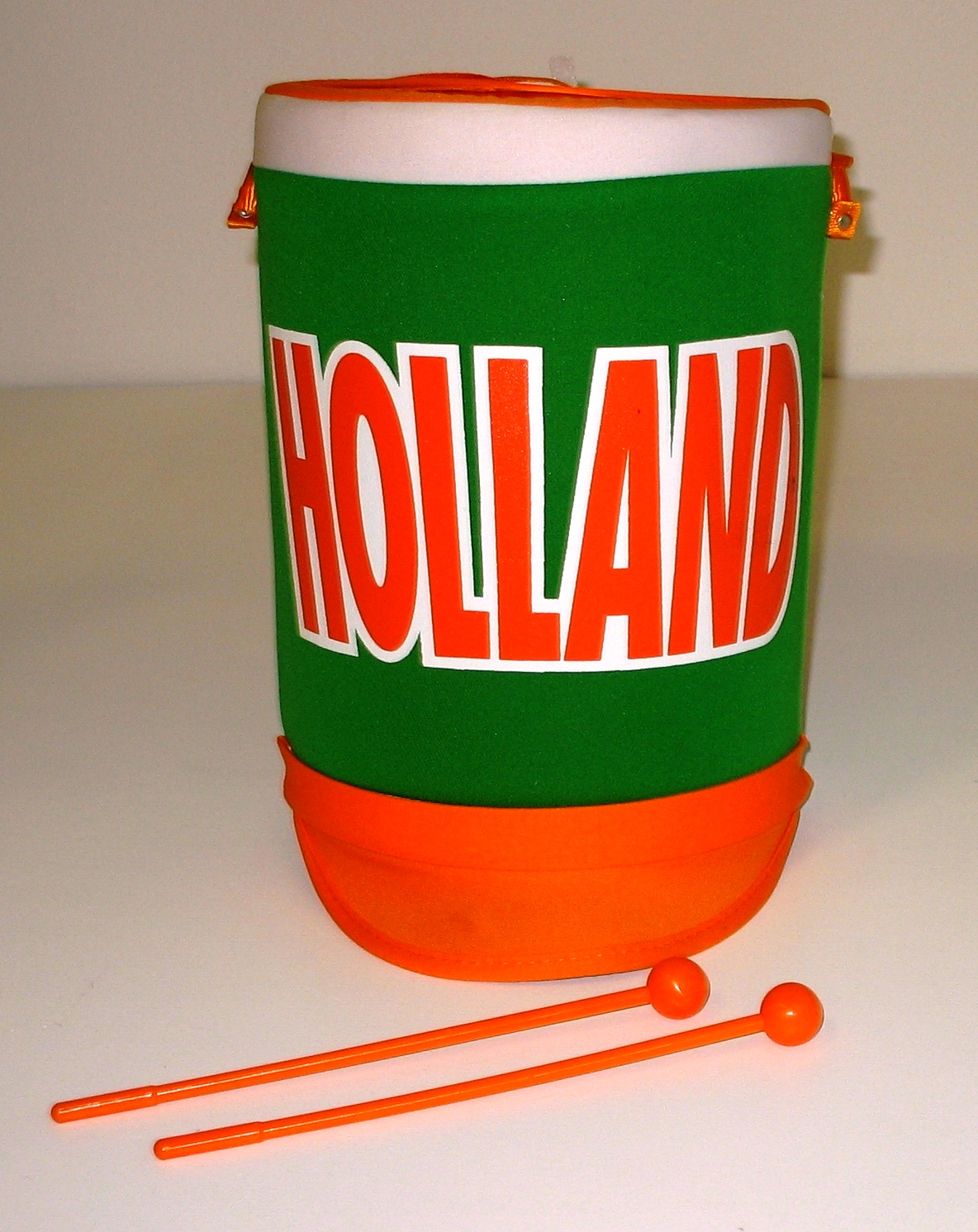
From time to time, the Netherlands is swept up in ‘Orange fever’ – a wave of national fervour that astonishes onlookers abroad. Entire streets are transformed in a single colour, and even the supermarket giant Albert Heijn temporarily swaps its trademark blue for orange. Many will still remember the craze for the little ‘wuppie,’ a fuzzy little toy with googly eyes, but above all the piercing sound of the vuvuzela – both icons of the 2010 World Cup in South Africa — will linger in many parents’ memories. Its predecessor, the so-called Trom-Pet (a tongue-in-cheek mix of trumpet and cap) introduced during the 2008 European Championship, was a rather pale imitation by comparison.
Royal roots
It is easy to forget that the Dutch obsession with orange did not begin with sport, but with the royal family. In the 16th century, Henry III of Nassau, a German ancestor of today’s King Willem-Alexander, married Claudia of Châlon in Breda. Through this union they inherited the French principality of Orange, along with the hereditary title ‘Prince of Orange,’ which in Dutch was rendered as ‘Oranje.’ The collective ‘orange spirit’ truly took off only after 1814, when the first king of the Netherlands, William I, ascended the throne. From then on, the colour orange became inseparably linked with royalist nationalism.
National pride
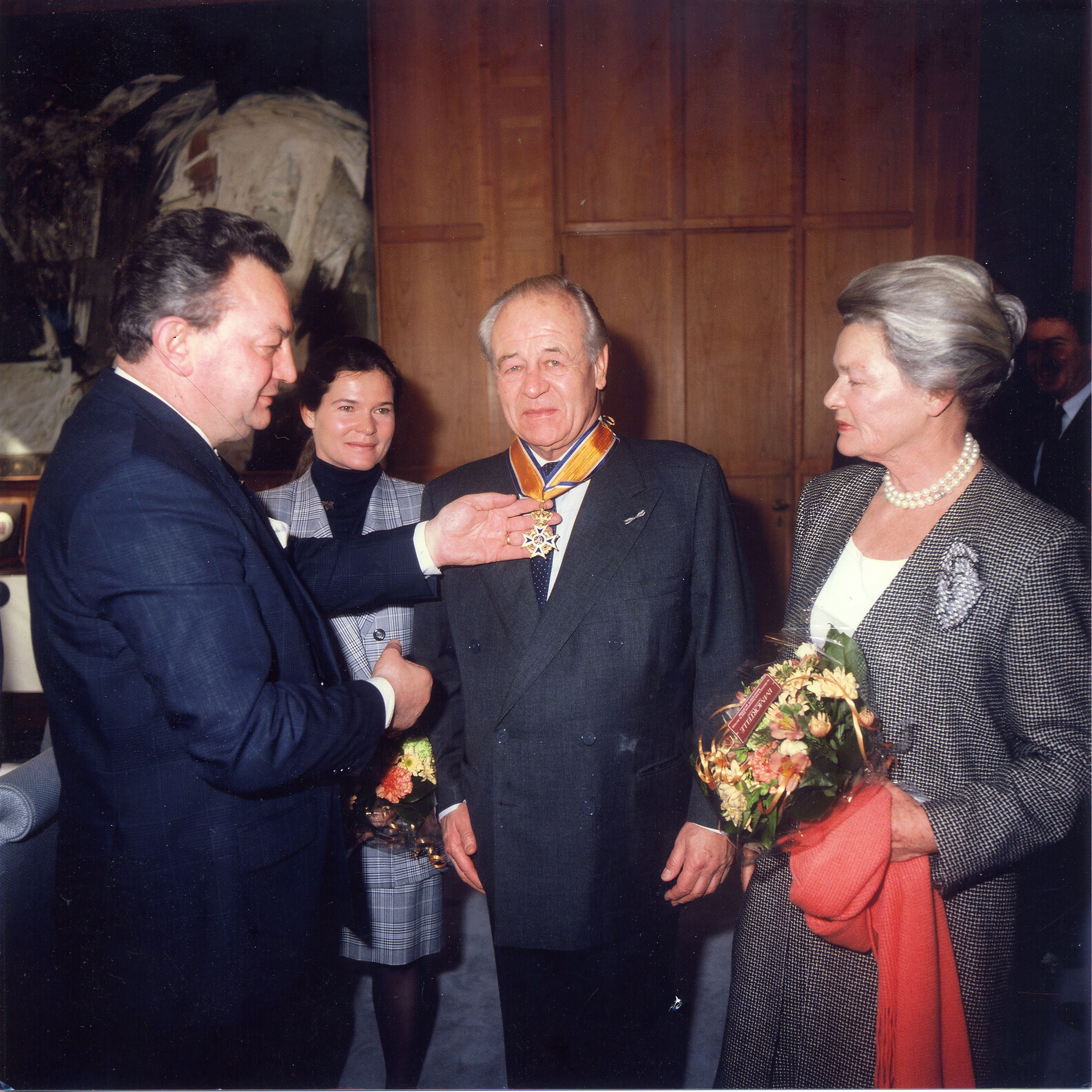
When the Dutch national football team first played Belgium in 1905, their kit was still white with a red, white, and blue sash. Two years later, the ‘Orange men’ beat their southern neighbours 3–1 wearing ‘the new national costume: orange shirt and white shorts.’ True Orange fever broke out in 1988, when the Netherlands won the European Championship. Heineken capitalised on this immense pride with a newspaper advert printed in orange, which fans could fold into a paper hat – the start of a long tradition of football gadgets from the brewery. In 1989, the company figurehead Freddy Heineken was honoured with a royal distinction , and five years later Heineken became the official sponsor of the UEFA Champions League. But Heineken was not the only brand with sporting ambitions of its own.
No entry with a hat
In 2004, the Danish brewer Carlsberg was the official sponsor of the European Championship in Portugal. As a result, Dutch fans wearing their Heineken Toeterhoed were refused entry to a number of matches. Two years later, during the World Cup in Germany, Heineken launched its ‘secret Dutch weapon’: the Jagershoed , a hunter’s hat with a pop-out loudspeaker. The rival brewer Bavaria was quick to counter with its bright orange Leeuwenhosen (lion’s trousers), a playful take on lederhosen. Heineken took Bavaria to court, but the ruling allowed Bavaria to continue the campaign – provided the orange trousers were not sold within ten kilometres of the stadiums.