Cool train
Beer transportation is as old as beer itself. Since the establishment of the three big breweries in the Netherlands - Grolsch (1615), Heineken (1864) and Amstel (1870) - a wide array of vehicles has been employed to carry raw materials to the breweries and the end product to the customers. All kinds of barges, boats, handcarts, dog- and horse-drawn carts, caravans, petrol and electric lorries, and not to be forgotten trains.
The first beer shipments by train began in around 1830, on the horse-drawn (!) railway between Budweis in Bohemia (now in the Czech Republic) and Gmunden (now in Austria). For the 1867 Paris World's Fair, the Austrian state railway company converted twelve closed freight wagons into ice-cooled beer wagons, paid for by the Dreher brewery.
Refrigerated
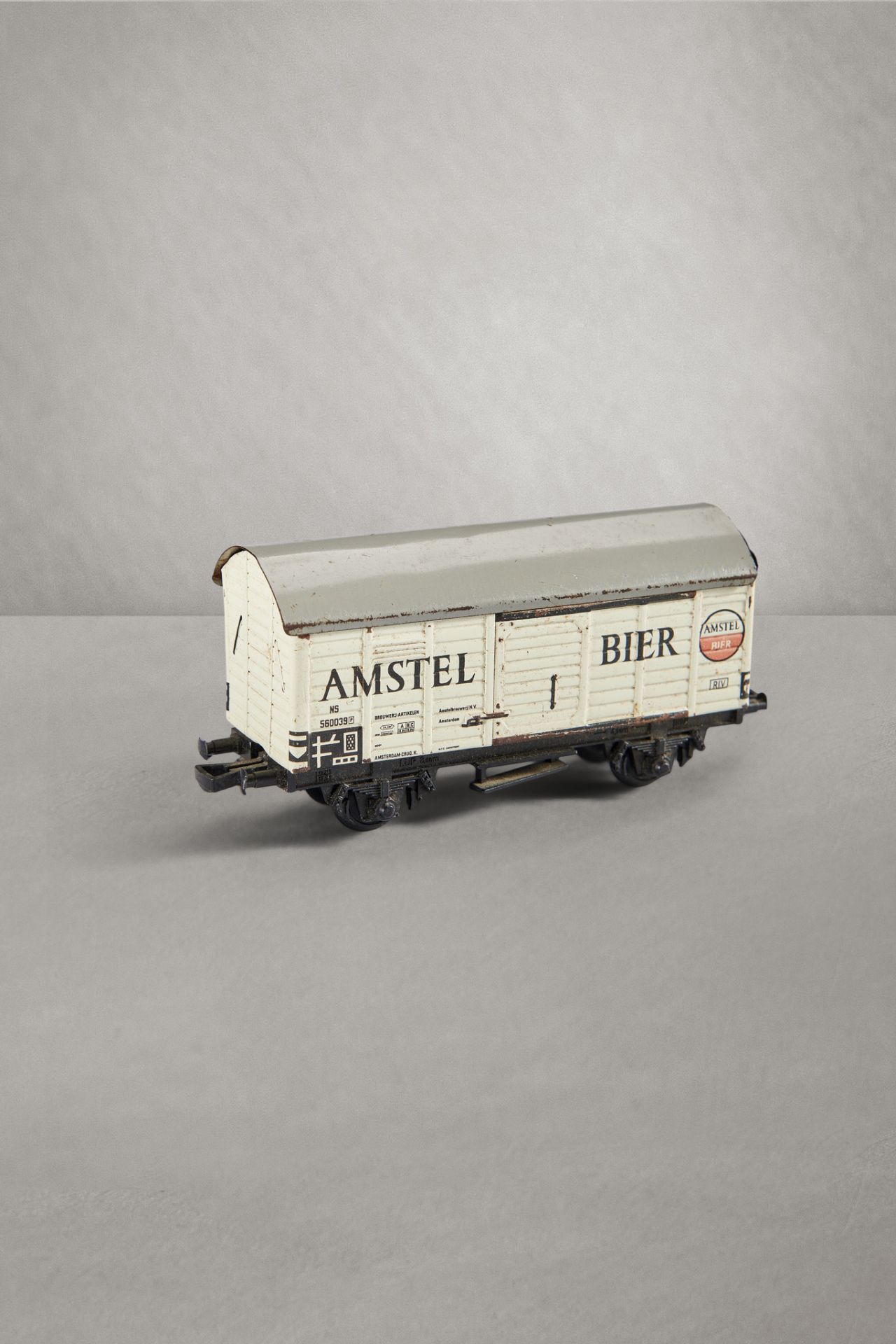
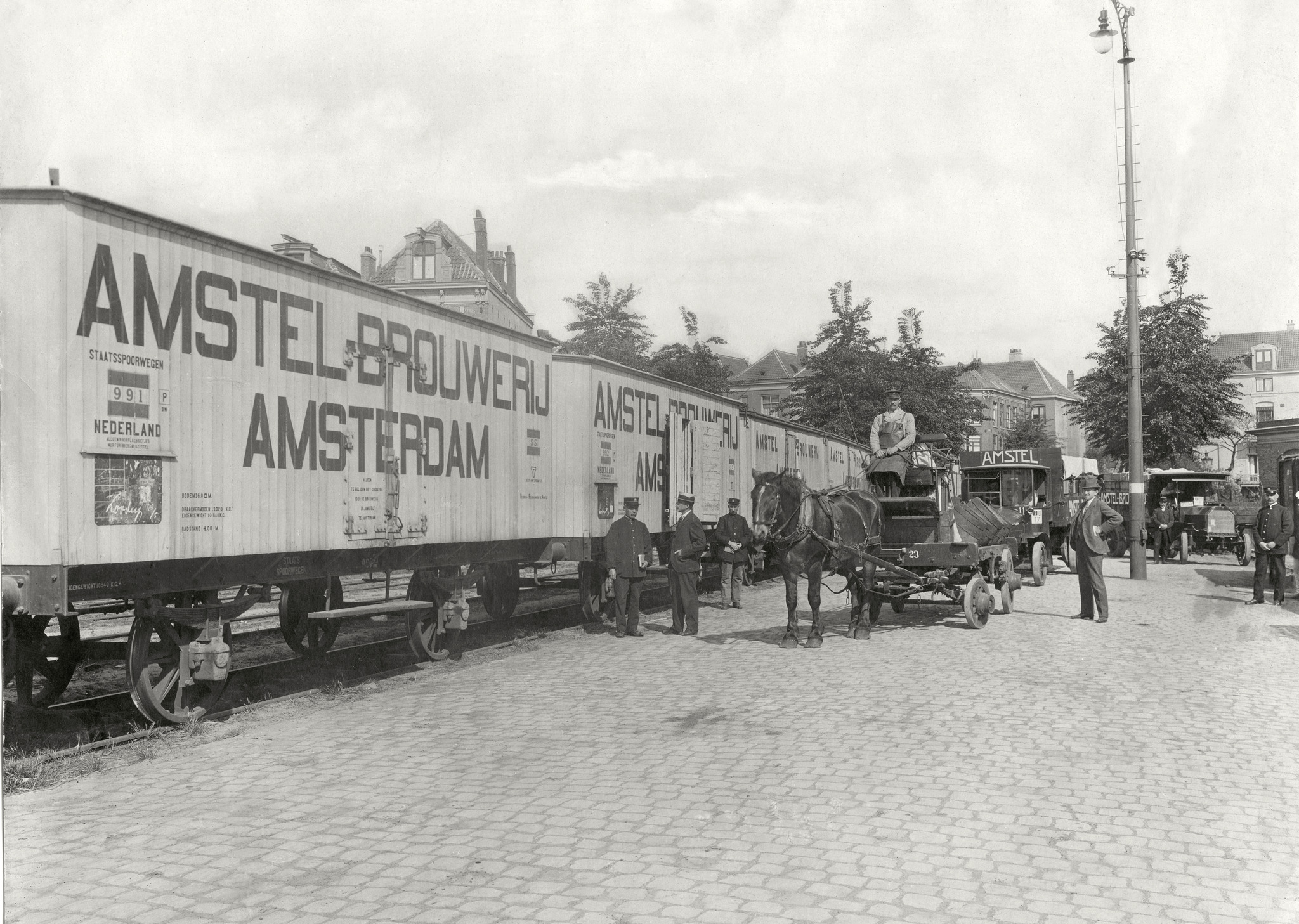
In the Netherlands, purpose-built refrigerated wagons were brought into use to transport beer and yeast; however, existing railway wagons were also converted for this purpose. A photo from 1917 shows two 'real' Amstel wagons at Weesperpoort station, close to the brewery on Mauritskade. The horse-drawn cart standing alongside the wagons is the kind that was used to carry the barrels throughout the city. Amstel beer began to be transported by road sporadically from 1907, using a modern lorry (there was only one). Trains and horse-drawn carts continued to dominate for many years.
Heineken steam train
Heineken's Beer Brewing Company (HBM) began transporting beer by train in the 19th century. The Heineken beer wagons of the 'Dutch Iron Railway Company' (Hollandsche IJzeren Spoorweg-Maatschappij - HSM) were built in 1886 by the German steam-train manufacturer Rathgeber. To reduce their weight, these refrigerated trucks only had double walls and roofs with straw mats in the hollow spaces between for insulation. The ice reservoir was mounted lengthways along the lantern roof to maximise the loading space. Horizontal slats against the end and side walls protected them from sliding and rolling barrels.
Green beer
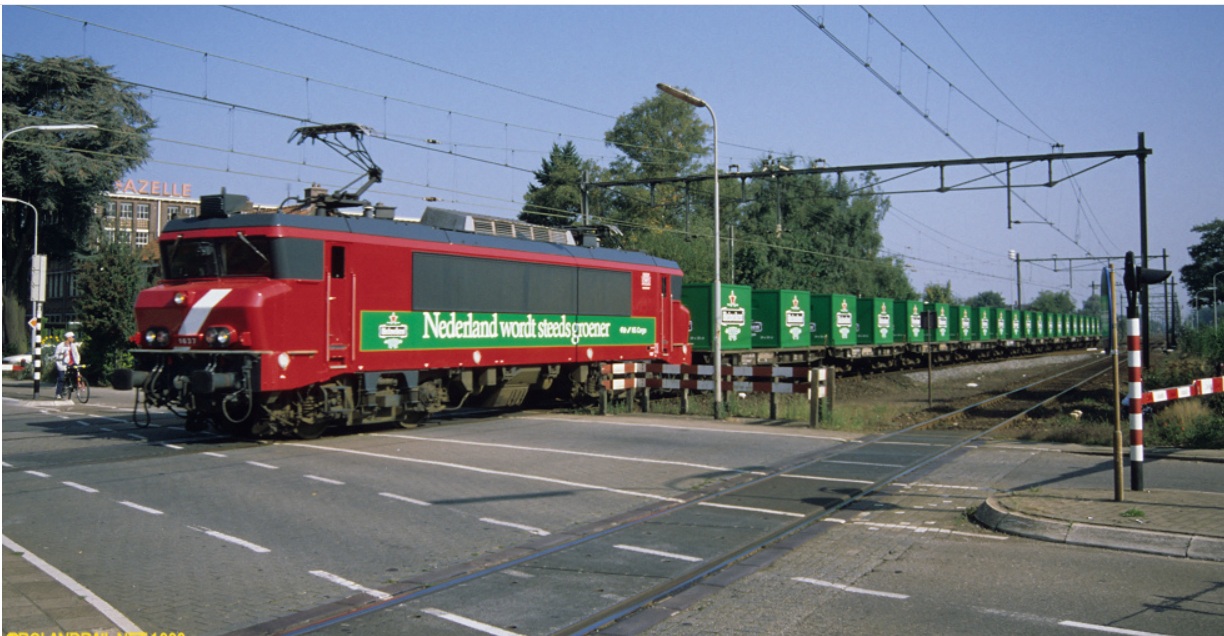
The rail transportation of beer and yeast in the Netherlands continued until the early 1970s, when it was replaced by road and air . By 1999, beer was being transported using electric locomotives and Heineken advertised its new green beer crates with the slogan: 'The Netherlands is getting greener.' A row of open carriages is pictured with giant crates on top. Sustainable transport was not a major concern in the 1990s. This didn't change until the 00s and the introduction of the lithium battery. In 2021, Heineken launched an electric mini-tank beer truck, to supply pubs in Amsterdam's city centre. Large electric trucks and electric barges have now replaced fossil-fuel transportation on land and water.