INFO
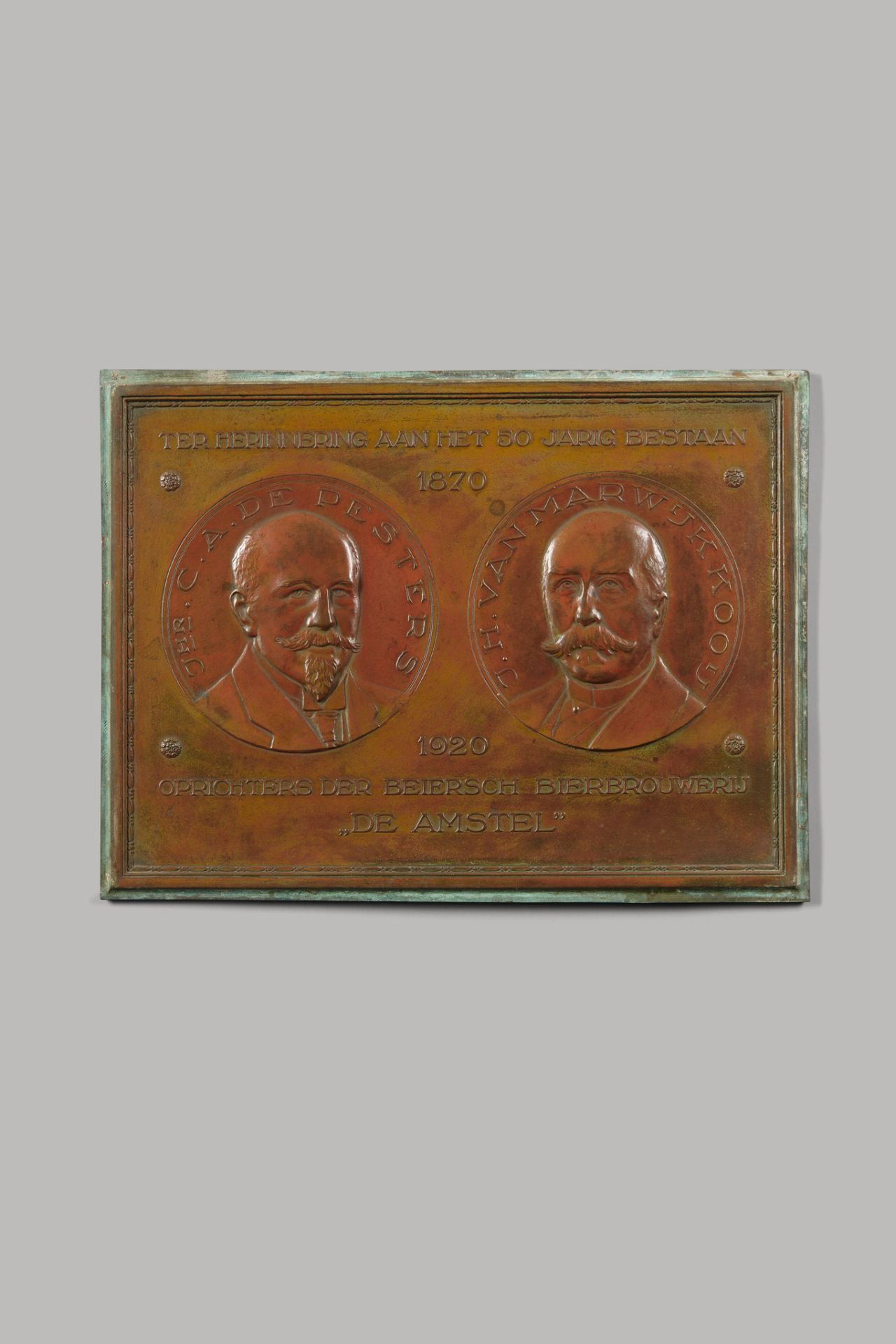
Plaque with portraits of J.H. van Marwijk Kooy and C.A. de Pesters, founders of De Amstelbrouwerij
1920
Bronze
31.5 x 42.2 cm
Gentlemen of beer
In 1868, Gerard Adriaan Heineken created a furore on Amsterdam's Singelgracht with ‘Beiersch’ beer from his steam beer brewery on Stadhouderskade. The light, clear and, thanks to bottom fermentation, pure-tasting brew particularly appealed to Amsterdam's elite. They liked to drink this 'gentlemen's beer' to distinguish themselves from ordinary workers with their cloudy, top-fermenting 'workers beer' – the type Heineken had started with four years earlier.
But Heineken was neither the first nor the last Amsterdam brewer of modern German beer, which had been introduced in 1865 by the Koninklijke Nederlandsche Beijersch Bierbrouwerij (KNBB) in Weesperzijde. In 1870, the first stone was laid for the Beiersch Bierbrouwerij De Amstel, a little further down the Singelgracht, on today's Mauritskade.
Amstel brothers-in-law
Not long after, the first casks of pilsener left this brand-new brewery, which was owned by Jonkheer Charles Antoine de Pesters and his brother-in-law, Johannes Hendrikus van Marwijk Kooy, who was also a nobleman. Where Heineken began with beer for the common man, De Amstel immediately set its sights higher up the social scale with a beer for gentlemen. Messrs De Pesters and Marwijk Kooy were financially completely independent thanks to their families' capital, unlike the merchant's son Heineken.
Gentlemen of Amstel
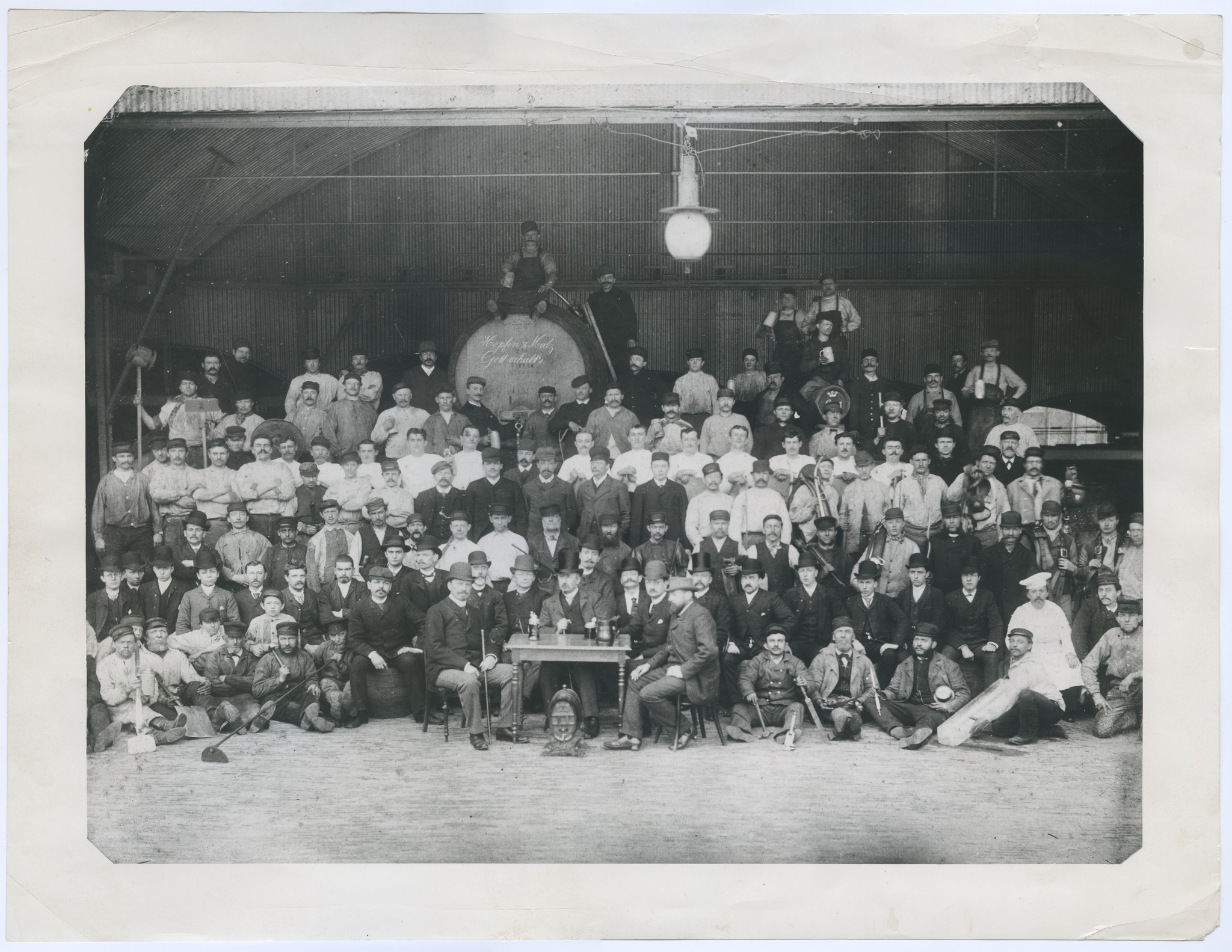
The 'gentlemen of Amstel' can be seen here with their 100 or so employees in a photograph taken on the occasion of the brewery's 25th anniversary. Centre front, at the table, is Van Marwijk Kooy, to his left (with a stick) is De Pesters. It's unsurprising that the gentlemen were celebrating this anniversary in such festive style: their brewery was running like a dream.
Competition
De Amstel's instant success was not without consequences for the other two breweries and it ignited a fierce competitive battle. Pioneer brewer KNBB suffered a massive drop in sales and withered away. Gerard Heineken too began to struggle – he had invested his reserves in the new brewing process. That is why, in 1872, he joined forces with d'Oranjeboom and founded Heineken's Beer Brewing Company (HBM) and, like De Amstel, started exporting beer. Heineken tried to alter its brand image with pictures of 'sophisticated beer chums'. This may initially have struck a chord with an upper-class target group, but the theme of 'conviviality for ordinary people' got the upper hand in Heineken advertising in the long run.